
Precision and efficiency for hard materials: Hard machining live at the workshop!

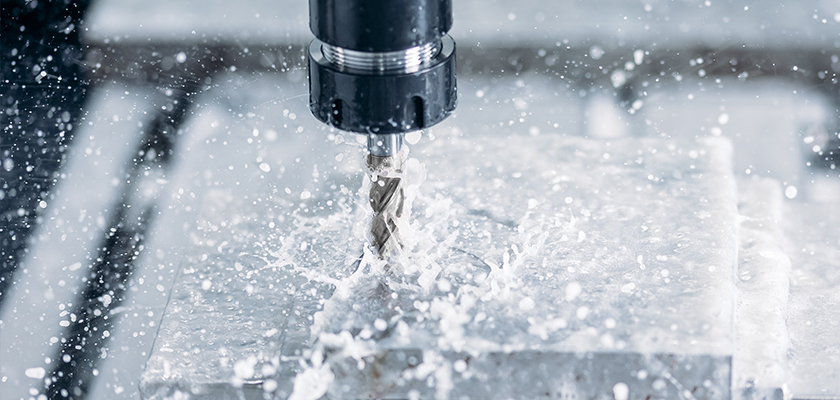
Hard machining is the machining of ferrous materials with a hardness of at least 54 HRC. Common hard machining processes include grinding, hard milling and hard turning. Hard milling has become increasingly important in recent years, particularly for components, instead of the time-consuming and costly process of grinding or eroding.
Hard machining now plays a central role in many industries. In toolmaking, precision tools are manufactured that require high hardness and wear resistance for demanding applications. In the automotive industry, it enables the machining of crankshafts, gearbox housings and other components that require not only strength but also maximum dimensional accuracy. The aerospace industry benefits from the production of critical components that have to withstand extreme loads such as high temperatures and mechanical pressure. In medical technology, it enables the precise production of surgical instruments and implants, which not only have to be precise but also biocompatible. It also plays a key role in power generation when processing components for turbines and generators, which have to withstand high loads during operation.
In all of these areas, hard machining is crucial in order to achieve the desired properties of the materials and ensure the functionality of the products.
Advantages of hard machining and hard milling
Hard machining offers numerous advantages for economical and high-quality production. It can replace time-consuming processes such as grinding or eroding and offers significantly higher productivity thanks to shorter throughput times. It also ensures a high surface quality, which noticeably improves the quality and dimensional accuracy of the components.
Hard milling in particular offers decisive advantages that make it a preferred processing method for hard materials. Thanks to its high precision, it enables the production of components with very tight tolerances and a high surface quality – a decisive factor in many applications. The high surface quality reduces the need for subsequent processing steps such as grinding or polishing. At the same time, the fast and efficient processing results in less thermal deformation of the workpiece compared to other processing methods, such as grinding. In addition, hard milling also scores highly in terms of productivity, as in many cases it can be carried out significantly faster than other machining methods.
All these advantages make hard machining an effective and efficient method for machining hard materials in various industrial applications.
From raw material to high-performance steel: Reasons why steel is hardened
The hardening of steels is an essential process to improve their mechanical properties and make them more efficient for specific applications. A key point is increasing the hardness: the hardening process increases the hardness of the steel, making it more resistant to abrasion and wear. This is particularly important for tools and machine components that experience high mechanical loads. At the same time, hardening leads to an increase in strength so that the steel can withstand higher tensile and compressive forces. It also provides increased wear resistance so that they are better protected against mechanical wear, extending their lifespan and reducing the need for frequent maintenance or replacement.
Another advantage of hardening is the improvement in dimensional stability, which ensures that components retain their original geometry even at high temperatures or under mechanical stress. The process also enables adaptation to specific applications. Through targeted hardening, steels can be optimized for special applications, e.g. for use in the automotive industry, in mechanical engineering or in the aerospace industry. Hardened steels also offer increased temperature resistance, which makes them ideal for applications in hot environments. Thus, you can apply hardening steels in various industrial applications that require high performance and reliability.
The hurdles of hard machining
A key difficulty in hard machining is tool wear, as the high hardness of the materials puts a lot of strain on the tools. This requires the use of special, high-strength cutting materials and regular tool changes. At the same time, hard milling generates a considerable amount of heat, which can have a negative impact on both the workpiece and the tool. Insufficient cooling can lead to deformation or premature destruction of the tool. Another problem can be the formation of microcracks that thermal stresses in the material cause. High heat generated during milling causes these stresses. To control them effectively, suitable cooling strategies or optimized cutting parameters are required.
Choosing the right machining parameters – including cutting speed, feed rate and cutting depth – is crucial. Incorrect parameters can lead to poor surface quality or inaccurate dimensions. In addition, machine stability plays an important role: vibrations or insufficient machine rigidity significantly reduce the processing quality. Finally, surface quality remains a key challenge, as machining hard materials often results in rough surfaces that need to be reworked.

Mastering hard milling: Strategies for precise and efficient machining
Numerous challenges arise in hard machining, but one can overcome them using various strategies and techniques. One of these approaches is the selection of the right tools. The use of high-quality carbide or cermet tools specially developed for hard milling can reduce tool wear and improve machining quality. Optimizing the machining parameters can also make a significant contribution. The careful selection of cutting speed, feed rate and cutting depth is crucial. Through tests and simulations, we can determine the optimum parameters that maximize both productivity and surface quality. Efficient cooling is also important to reduce heat generation during milling and extend tool life. In addition, targeted cooling can also prevent deformation of the workpiece.
The use of stable and precise machines is important in order to minimize vibrations. Regular maintenance and calibration of the machines contribute to stability. Sensors and monitoring systems help monitor the machining process in real time. This allows us to detect problems at an early stage and make adjustments. Furthermore, a well-trained workforce is critical to success in hard milling. Training on best practices, tool handling and machine operation can improve machining efficiency and quality. By using CAD/CAM software to simulate the machining process, potential problems can be identified in advance and machining can be optimized. By combining these strategies, we can effectively overcome the challenges of hard machining.
The tools used for hard milling are often made of coated cemented carbide, ceramic or polycrystalline cubic boron nitride (CBN). At high cutting speeds and temperatures, these materials allow for precise cuts due to their exceptional hardness and wear resistance. Manufacturers often coat the tools with special coatings that reduce friction and increase tool life. It is important to choose a carbide substrate that has high hardness and wear resistance. Typically, cobalt-bonded carbides (such as WC-Co) are used as they offer a good combination of hardness and toughness. For special applications, we can also consider other alloys or coatings to optimize performance. It is advisable to consider the specific requirements of the machining and the material to make the best choice.
Hard, harder, HAMazing: The secrets of our tools for hard machining
The right choice of carbide is a decisive factor for success in hard machining. Carbides are primarily classified according to their CO content and the tungsten carbide grain size. A higher cobalt content increases toughness but reduces hardness and wear resistance. In contrast, a lower cobalt content provides greater hardness, but at the same time increases susceptibility to fracture. HAM mainly uses carbide grades with a cobalt content of between 6 and 12 %. The microstructure and structural changes have a significant influence on the properties of carbides. The finer the grain size, the harder the carbide becomes. In order to determine the optimum carbide grades, HAM analyzed around 110 variants in its in-house laboratory.
The grain size of hard metals ranges from less than 0.2 µm in the nano range to over 6.0 µm in the extra coarse grain range. This diversity is accompanied by widely varying material properties. At HAM, we generally use a grain size range from ultra-fine to fine grain, as these meet the high requirements of many tools.It is essential to match the carbide grade carefully to the respective application. Not every grade is suitable for every tool. To ensure the selected carbides meet our high quality standards, they are extensively tested for their physical and metallographic properties in our in-house laboratory.

The geometry of the tool is also an essential component of hard machining. We do everything we can to match it perfectly to the requirements. Various factors are crucial to achieving optimal results. The negative rake angle ensures a stable cutting process even under high loads. At the same time, a reinforced core increases the robustness of the tool. Careful cutting edge rounding or preparation minimizes the risk of breakage and ensures consistent performance. Finally, mirror-smooth surfaces help to reduce friction and achieve an exceptional surface quality on the workpiece. All of these elements work together to maximize the precision and efficiency of hard machining.
To achieve a mirror-smooth surface and to meet the market’s growing demands on PCD and solid carbide tools, HAM has developed a hybrid, technologically highly complex solution – Hybrid Surface Finish (HSF). This method makes it possible to achieve a precisely defined surface quality and homogenize the cutting edges at the same time. An essential factor for the performance of the tools. A precisely coordinated grinding quality defines the basis for success before the surface treatment.
But the proper coating also gives tools decisive advantages in hard machining. This should be wear-resistant, friction-reducing thanks to a smooth coating without droplets and heat-resistant up to 1,100 °C. The most common coatings include TiAlN- / and AlTiN-based coatings. These are available as mono- or multilayers, supernitrides or nanostructures. You can use TiAlN or TiSiN coatings for applications with particularly high temperatures, such as hard machining. In the field of processing non-ferrous metals, so-called rainbow coatings (ta-C coatings) are becoming increasingly popular. However, they can only operate at a temperature up to 550 °C. A high-quality coating is only one part of success. Only the perfect interaction of all aspects makes a tool perfect.
Accept challenges, achieve precision: Our conclusion on hard machining
Hard machining is at the heart of modern manufacturing technologies. From the automotive industry to aerospace and medical technology, machining hard materials opens up a wide range of applications. These applications cover many different industries. However, it also poses considerable challenges. The extreme hardness of the materials leads to high tool wear, while the resulting heat can promote deformation and surface defects. Choosing the optimal machining parameters and efficient cooling are essential to overcoming these difficulties. HAM accepts these challenges and offers solutions that help you to machine the hardest materials with the highest accuracy. The perfect coordination of carbide grades, geometry, surface technology and coating results in tools that meet the highest demands. Let us master the challenges of hard machining together.